







Westerns. Despite what we see in movies and in numerous dusty old TV series about the Wild West, the wild times to be had were actually minimal. In fact even several of the most notorious cow towns of the so called Wild West recorded less than a handful of deaths by gunshot wounds even in the peak of the Wild West era. The reality is, time hung heavy and moved slow. Distances were vast on horseback so strangers were relatively rare. Most towns were small and rural, and like small towns even today, while crime and violence could erupt, it was exceptional and unusual.
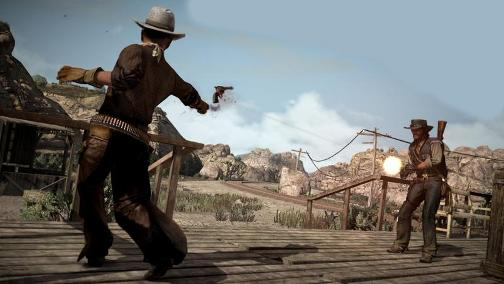
No, for the most part, you tended your cattle and you cooked your beans, and excitement was hard to come by. No TV, no computer, no music player, in fact rarely any music or entertainment save what you made yourself.
Understandably, Hollywood revisiting this era had no choice but to liven it up, and to make what legends there were seems a lot more legend.
The slow passing of time in those far off days was most likely recorded by a Waltham American Watch Company pocket watch, or from a small clutch of other American watch manufacturers, most of them, like the Wild West, faded into history.
By1870 there were at least 37 companies devoted exclusively to watch production, while some 60 firms engaged in their manufacture. Operations tended to be small scale – the 37 firms of 1870 employed only about 1,800 men. The industry was marked by new incorporations, bankruptcies, and re-organisations.
Waltham Watch Company

American Waltham Watch Company became one of the most famous of pocket watch makers. They were for a while the symbol of American manufacturing prowess. During the one century period in which the company was in business, Waltham produced only a few million Waltham pocket watches.
The pocket watches were of such high quality that some of them are still in high demand among collectors even today. Each Waltham pocket watch comes with its own unique serial number. From the serial number engraved on each watch, one can tell the year of its production.
Elgin
Another company that rose to fame was “Elgin,” the result of a union of three diversely talented men: John C. Adams, a watchmaker, Benjamin W. Raymond, a former Chicago mayor and businessman, and George B. Adams, a successful jeweller of Elgin, Illinois. The three joined forces in 1864 to organise the National Watch Company. It began to produce timepieces three years later, and in 1874 became the Elgin National Watch Company. It was, perhaps, the best managed of the watch companies; certainly it could boast it paid dividends from the beginning, and in its first six years had produced and sold 42,000 watches!
The Illinois Springfield Watch Company

This company was founded in 1869, it was the second producer of pocket watches in the Prairie State. After doubtful manouverings and two or three re-organisations, it became the Illinois Watch Company, and for years maintained the status of a major producer whose watches enjoyed high repute.
John C. Dueber

Mr. Dueber founded a watch case business in Cincinnati in 1864, and in a few years his company held a leading position in the industry. In 1886, it consolidated with the Hampden Watch Company, a Massachusetts concern organised in 1877, and the business was moved to Canton, Ohio.
Hamilton

And then the the final giant of the American watch industry. This was the Hamilton Watch Company which came into existence in 1892 in Lancaster, Pennsylvania, primarily to manufacture railroad watches. Within a short time, its name was symbolic of extreme timepiece accuracy.
Watch Cases
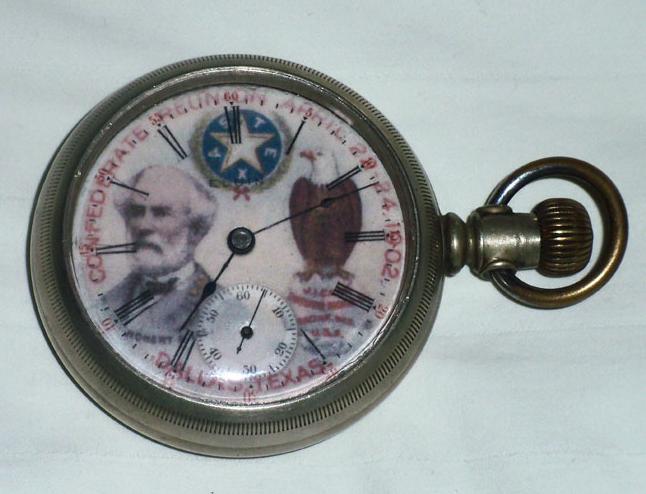
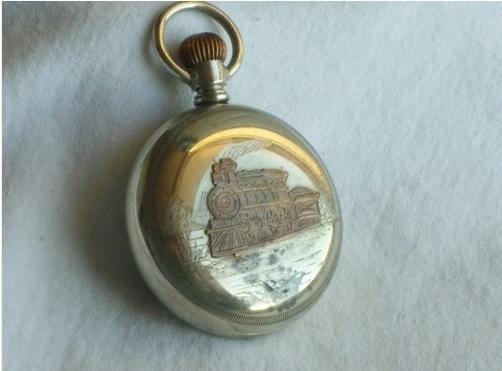
Watch cases could be plain, engine-turned, or engraved. For those engraved there were several favourite motifs. One was the locomotive, the monster of the steam age, generally found on cheaper watches, appealing to youths for whom the locomotive held romance and fascination.
Another, often found on the better gold-filled cases, depicted the noble woodland stag; he appeared time and again in different scenes and poses, often on the cover of hunting cases. Birds were less frequently used on watches intended for men than on ladies’ timepieces where they hovered over honeysuckle, touched beaks over nests, or bore streamers of ribbons.
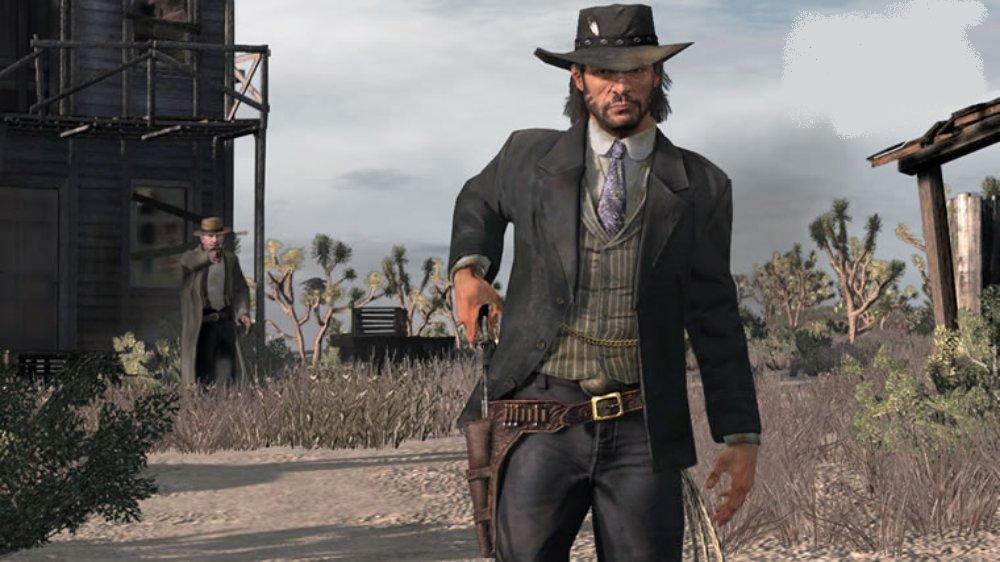
Most of all, engravers delighted in portraying romantic cottages in dreamy, bucolic settings. Italianate villas with towers, or sharply gabled Gothic cottages were depicted in country glades reminiscent of the work of the Hudson River artists. It’s all rather far removed from the gun-slinging mayhem that was supposed to be the Wild West.
The watches men carried
The turnip pocketwatch

A farmer or workman liked a heavy, thick watch of coin silver, or silver plated with brass to resemble gold. He referred to it as a “turnip.” In the earlier period, before 1890, it was usually wound with a key rather than by a stem, and might be either open face or closed. In general. it was severely plain or engine turned, or with a minimum of engraving. It was designed to sell at a low price and give years of service; often it kept quite accurate time.
Railroad pocketwatch

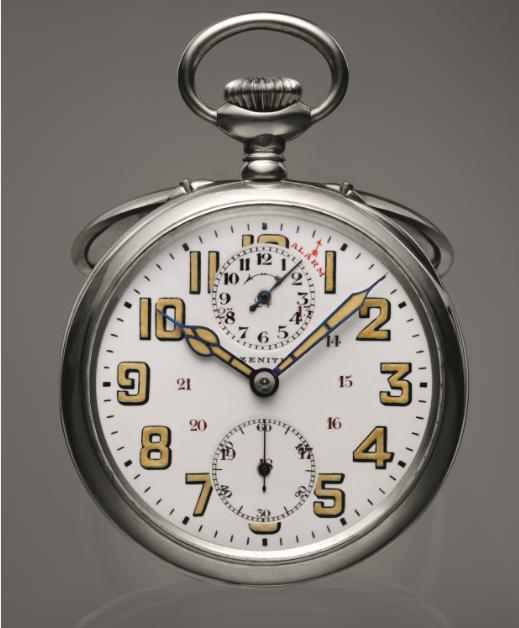
Railroad men needed a dependable timepiece, accurate beyond the capacity of most watches, and the industry provided them “Guaranteed to pass railroad inspection.” Their cases were usually gold-filled. and normally, open face. They were expensive, from $75 up, in a day when even an engineer made no more than $100 a month-and jewellers sold them on credit, so much down, so much a month.
The wealthy man’s pocket watch

Office workers and small business men chose watches in gold-filled cases, albeit less accurate and less costly than those carried by the railroaders. Dudes and fancy dressers preferred hunting cases on elaborate chains or fobs.
For the man of wealth, they could afford to look to expensive European tastes, and thanks to the adventurous spirit of Vacheron Constantin in the 19th century, their watches were known and admired in the United States. British watches were also held in the highest esteem.
Taste alone dictated the limits of elegance in a timepiece.
Watches were heavy and massive not because of technological limitations, but because the market preferred them that way. Women’s watches were often small, elegant and thin watches – and kept accurate time.
If you fancy acquiring a genuine 19th century pocket watch it certainly pays to surf around. Some are expensive, but others are not, and you could pick up a well known brand for way under $1,000 depending on the condition of the watch. Because so many millions were made and yet only relatively few people collect the middle to lower range pocket watches, there is an abundance of them to be had.
So, the picture painted here of the Wild West is peaceful, industrially competitive and hard working, and almost pastoral. Barely a gun fight or a tall dark stranger riding into to town to be had. I think I prefer the Hollywood version.

Information on the watch brands and watches worn was adapted from a 1964 article by author James W. Neilson