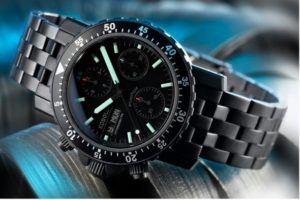







It’s only taken 84 years, but that old confusion about the term ‘water-resistant’ on the back of your watch has finally been resolved. In the good old days for a watch to be ‘water-resistant’ it could mean little more than if it got splashed it would still be ok. Nowadays it’s got to mean a whole lot more than that.
The first water resitstant watch
The first water-resistant watch was developed by Rolex founder Hans Wilsdorf, reputedly after finding an oyster impossible to open at a dinner party in 1926.
This of course went on to become the world famous Rolex Oyster.
The new standard for water-resistance
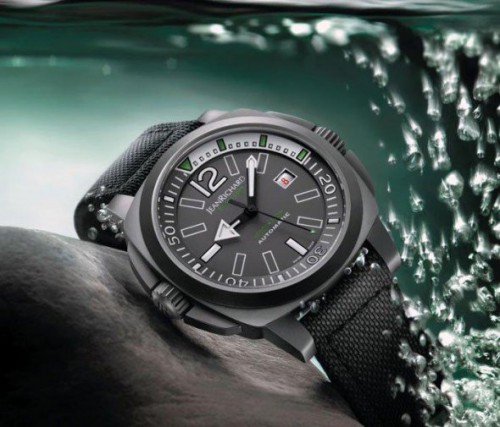
As of July of this year water-resistant watches must conform to a new standard, ISO 22810. This new standard turns things on its head by defining exactly what water-resistance must mean, but does not specify how manufacturers must meet the criteria. The previous standard included a point-by-point description of tests which manufacturers had to perform before they could label their watches as ‘water-resistant.’ This has disappeared from the new standard.
So whether you wear your watch for snorkelling or just admiring the big luminous face in the cinema, you can be secure in the knowledge that if your watch bears the words ‘water-resistant’ it will withstand overpressure of at least 2 bars or 20 metres, which covers pretty much everything the average person can get up to in water.
The new ISO 22810 standard (Swiss watch industry standard NIHS 92-20) for water-resistance in watches has principally been designed to define the term for the consumer.
Of course if you know your ISO’s from your elbows you’ll know that ISO 6425/NIHS 92-11 for diving watches requires water-resistance to 10 bars or 100 metres.
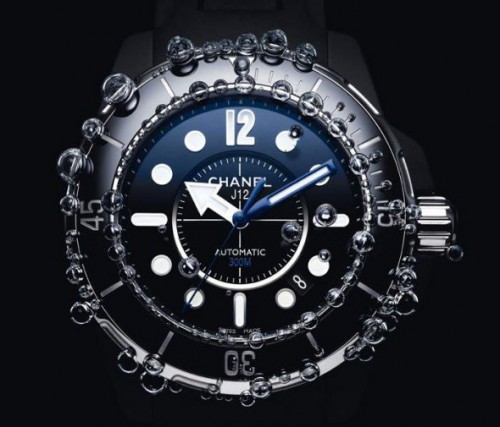
Commenting on the new standard, the Federation for the Swiss Watch Industry said, “The ISO 22810 standard has been under construction in one form or another for years, but has always fallen at the final hurdle.”
The new ISO standard allows the use of bars as a unit of measurement, or the equivalent in metres. The manufacturer does not have to spell out the number of bars to which the timepiece is ‘water-resistant’ but the fact that the term is on the watch means it has now been individually tested to above the standard’s minimum requirement of 2 bars. The new standard rules out mere batch sampling. Not only that, but water-resistance must remain constant throughout the warranty period.
The manufacturer must also define warranty conditions and precautions the wearer must take to maintain water-resistance. As the SSC concludes, “the guarantee is more binding for the manufacturer.” Fancy a swim?